
When Everything Changed
Adam and Eve had never needed to hide from God. Yet one day, when they heard Him in the Garden of Eden, they went among the trees to conceal themselves.
Something had happened.
The Bible tells us that God created Adam and Eve in His image and placed them in a world He had declared very good (Genesis 1:26–31). He gave them a beautiful garden to live in, work to care for, and the privilege of fellowship with Him.
God also gave Adam a command. He could freely eat from the trees in the garden, except for the tree of the knowledge of good and evil. God warned him that eating from it would bring death (Genesis 2:16–17).
It was a simple instruction. But obedience would require Adam and Eve to trust God’s word.
Then, in Genesis 3, the serpent entered the picture.
The Choice That Changed Human History
The serpent began by questioning what God had said.
He suggested that God was withholding something desirable from Adam and Eve. Then he directly contradicted God’s warning, telling Eve that they would not surely die if they ate the forbidden fruit. Instead, their eyes would be opened, and they would become like God, knowing good and evil (Genesis 3:1–5).
Eve looked at the fruit. It appeared good for food, pleasing to the eye, and desirable for gaining wisdom.
She ate it and gave some to Adam, who was with her. He ate it too.
Eve had been deceived, while Adam knowingly disobeyed the command God had given (1 Timothy 2:14).
They had chosen to follow the serpent’s words rather than God’s.
What happened next was probably far different from what they had expected.
Their eyes were opened, but instead of enjoying the freedom they had been promised, they became ashamed of their nakedness. They sewed fig leaves together to cover themselves.
Later, when they heard the Lord God in the garden, they hid.
God called to Adam:
“Where are you?” (Genesis 3:9, NIV 2011).
Adam answered that he was afraid because he was naked, so he had hidden himself.
When God questioned him about eating the forbidden fruit, Adam blamed Eve. Eve, when questioned, pointed to the serpent.
In just a few verses, we see fear, shame, excuses, and blame enter the human story.
Perhaps the most painful part is that Adam and Eve were now afraid of the God who had given them life.
Their disobedience had damaged the fellowship they once enjoyed with Him.
Christians refer to this event as the Fall of humanity. It was the beginning of sin’s terrible consequences for the human family.
Sin: More Than We Often Realize
We usually recognize sin in things such as dishonesty, cruelty, greed, or injustice. The Bible certainly calls these wrong.
But Adam and Eve’s experience helps us understand something deeper.
They had received a clear command from God and chose to act against it. They allowed their desire for something God had forbidden to take precedence over His word.
This is at the heart of sin: turning away from God’s will to follow our own.
It is worth making a distinction here. Asking honest questions about God is not the same as rebelling against Him. Throughout Scripture, people bring their questions, fears, and struggles before God. Adam and Eve’s wrongdoing lay in their decision to disobey what He had commanded.
The problem did not end with them.
The apostle Paul writes:
“for all have sinned and fall short of the glory of God” (Romans 3:23, NIV 2011, excerpt).
Every one of us has fallen short.
We may have different backgrounds, beliefs, and experiences. Some people have lived through terrible circumstances; others have enjoyed relatively peaceful lives. Yet none of us can claim to have perfectly obeyed God in everything.
Even when we know what is right, we sometimes choose otherwise.
Paul explains in Romans 5:12–19 that sin entered the world through Adam’s disobedience, bringing consequences for the entire human family. We are born into this fallen condition, and our own sinful choices reveal its continuing reality.
Jesus also taught that sinful thoughts and actions arise from within the human heart (Mark 7:20–23).
The problem, then, is not confined to what other people can see. It reaches into our motives, desires, and the choices we make when no one is watching.
What We Lost in Eden
When Adam and Eve disobeyed God, their lives changed in ways that would affect generations to come.
Their relationship with God was broken.
Before the Fall, Genesis tells us they were naked and unashamed. Afterward, they were afraid and tried to hide.
God had not stopped knowing them or caring about them. Indeed, He came to confront them. But their disobedience had brought guilt and alienation into their fellowship with Him.
The prophet Isaiah later warned Israel that their sins had separated them from God (Isaiah 59:1–2). Paul describes the condition of people apart from Christ as being spiritually dead in their sins (Ephesians 2:1–3).
Their relationship with one another was affected.
The blame that followed their disobedience was only the beginning.
In the next chapter of Genesis, Cain becomes angry with his brother Abel and eventually murders him (Genesis 4:1–8).
Sin was already bringing terrible consequences into family life.
We still see how quickly jealousy, selfishness, pride, and anger can damage relationships, even between people who care deeply about one another.
Work became difficult, and life became subject to death.
Before the Fall, Adam had been given the responsibility of tending the garden. Work was part of God’s good purpose for him (Genesis 2:15).
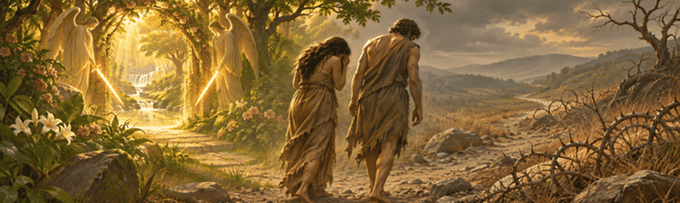
Afterward, God declared that the ground was cursed because of Adam’s disobedience. Growing food would involve painful toil, thorns, and thistles (Genesis 3:17–19).
God also told Adam that he would return to the dust from which he had been formed.
Death, which God had warned about, had become a certainty.
Adam and Eve were sent out of the garden, and access to the tree of life was guarded (Genesis 3:22–24).
Even creation was affected.
The world still bears witness to God’s goodness. We see it in the beauty of nature, the changing seasons, and the remarkable life that surrounds us.
Yet we also live with disease, decay, natural disasters, and suffering.
In Romans 8:20–22, Paul describes creation as subjected to frustration and groaning as it awaits freedom from decay.
This does not mean we should blame people for the suffering they experience. When Jesus’ disciples asked whether a man’s blindness was caused by his sin or his parents’ sin, Jesus rejected both explanations (John 9:1–3).
We may not understand why particular hardships occur. The Fall helps explain the broken condition of the world as a whole, while reminding us that suffering people need compassion, not judgment from others.
What Does This Mean for Us Today?
It is easy to look at Adam and Eve and wonder why they made such a choice.
But their story also invites us to examine ourselves.
Have we never hidden a mistake because we were afraid of the consequences? Never blamed someone else when we should have accepted responsibility? Never allowed pride or selfishness to influence a decision?
Most of us recognize something of ourselves in those situations.
We may genuinely want to do what is right and still find ourselves doing things we later regret.
Education, discipline, and good values are important. They can help us live responsibly and treat others well. But Scripture teaches that they cannot remove our sinful condition or make us righteous before God.
There is, however, another truth we should remember.
Sin has affected humanity, but it has not erased the image of God in us.
Long after the Fall, the Bible continues to affirm that people are made in God’s image (Genesis 9:6; James 3:9).
Every human life still has dignity and worth.
We continue to see kindness, generosity, courage, and a desire to do good. These are reminders of the goodness of God’s creation, even in a world affected by sin.
Recognizing our fallen condition should therefore make us humble. We have no reason to look down on others when we too need God’s mercy.
And perhaps this is one of the most important things Genesis 3 teaches us. Before we can understand why we need forgiveness, we must recognize what has gone wrong in our relationship with God.
Reflect & Respond: When you read about Adam and Eve hiding from God and blaming others, what do you recognize about human nature, including your own responses when something goes wrong?
A Promise Amid the Consequences
Genesis 3 is a difficult chapter to read. Adam and Eve’s disobedience brought consequences that neither could undo.
Yet before they left the garden, God spoke words that would take on greater significance as the biblical account unfolded.
In Genesis 3:15, God addressed the serpent and spoke of conflict between the serpent and the woman, and between their offspring. He declared that the woman’s offspring would strike the serpent’s head, while the serpent would strike his heel.
In the immediate account, these words announce continuing conflict and the serpent’s eventual defeat.
Christians have long understood this passage, in light of the rest of Scripture, as an early indication of the victory that would ultimately come through Jesus Christ.
It is often called the protoevangelium, meaning the first announcement of the gospel.
There is also a quieter moment worth noticing.
Before Adam and Eve left Eden, God made garments of skin and clothed them (Genesis 3:21).
They had tried to cover themselves with fig leaves. Now God provided clothing for them.
The passage does not explain everything about this act, but it does show God’s care for them even after their disobedience.
His judgment remained. They would still leave the garden. The life they had known was gone.
Yet God’s dealings with humanity would continue.
As we move beyond Genesis 3, we begin to discover how deeply sin has affected the human family and how Scripture gradually reveals God’s purpose to address it.
For now, the question before us is a serious one.
If sin has separated us from God, and we cannot make ourselves righteous through our own efforts, what can be done?
That is where the next part of the Good News begins.
Reflect & Respond: What has the account of the Fall helped you understand about sin and your relationship with God?

Digging Deeper: Insights from the Biblical Languages
The Bible was originally written in Hebrew, Aramaic, and Greek. These three expressions offer a closer look at some important details in the account of the Fall.
1. Môt Tāmût (מוֹת תָּמוּת): You Shall Surely Die
In Genesis 2:17, God warns Adam about eating from the forbidden tree.
The Hebrew expression môt tāmût combines two forms of the verb meaning “to die.” This construction emphasizes the certainty of death.
The KJV renders it “thou shalt surely die.”
The wording establishes the seriousness of God’s warning. Genesis 3 later describes humanity’s mortality and exclusion from the tree of life (Genesis 3:19, 22–24).
2. ʾAyyekkāh (אַיֶּכָּה): Where Are You?
The Hebrew word ʾayyekkāh appears in God’s question to Adam in Genesis 3:9.
It means “Where are you?”
The question draws Adam into an encounter with God after his disobedience. Adam’s answer reveals his fear, and the conversation that follows exposes what he has done.
God’s question becomes the beginning of Adam being called to account.
3. Hamartia (ἁμαρτία): Sin
The Greek word hamartia means “sin.”
Paul uses it in Romans 5:12 when explaining how sin entered the world through Adam.
In Paul’s writings, the word can describe sinful actions and, particularly in Romans 5–8, sin as a power affecting fallen humanity.
This broader meaning helps us understand why Paul connects Adam’s disobedience with the condition of the whole human family.
Continue Exploring the Good News
We have seen what happened when humanity turned away from God and why the consequences of that choice still matter today.
But one question remains: If we cannot remove our own sin, how can our relationship with God be restored?
Continue reading: Our Need for a Savior.
The next article explores why we need someone who can do for us what we cannot accomplish for ourselves.